
Montgomery County Arrest Reports
The sheriff's site offers a current-custody search. It has no dated multi-day booking archive with a stated depth or date range. Its Most Wanted page is a warrant notice, not an arrest record. County government pages point to the right offices and records routes. None of these posts a booking archive by date.
The word "log" carries several local meanings. Indiana law requires a daily log of suspected crimes, accidents, and complaints. A jail booking record documents who came in. A newspaper blotter mixes calls, crashes, warrants, and arrests. A court docket only begins once a case is filed. None of these records can substitute for the others. No private page deserves the county's official label.
Read Montgomery County Blotters
First decide what event and period you actually need to prove. A current custody question belongs at the sheriff's inmate search. A call or arrest handled by Crawfordsville Police belongs in that department's own records. A filed criminal case belongs in Indiana MyCase. The clerk's official court file holds it too. Work backward through these sources carefully. Never assume the same name means the same person.
- Identify the likely arresting agency, date range, and location.
- Check the sheriff's current inmate search if custody may continue.
- Ask the sheriff or city police for the applicable daily-log, incident, arrest, or booking record.
- Search MyCase by name and narrow the result to Montgomery County for a public filed case.
- Use local news and private archives only as leads, then verify their claims with an agency or court.
Crawfordsville Police runs an official Records Services channel for its reports. The Montgomery County jail is the common booking destination for arrests. County deputies bring people there. So do city officers, town police, state troopers, and other agencies. Keep the arresting agency separate. The jail that received the person is another matter. For a same-day custody question, turn to Arrested Today rather than an older article.
Montgomery Arrest Log Fields
Indiana Code 5-14-3-5 sets out the minimum daily-log and arrest information generally open for inspection, within statutory limits. It does not force any agency to post that material in a searchable online table. Publication and access are two different things.
| Entry field | How to read it |
|---|---|
| Name, age, address | Identity details recorded by the agency, with protected data subject to withholding. |
| Offense or alleged offense | The reported charge at that stage, not a conviction. |
| Time and place | The recorded time and location of the arrest or alleged event. |
| Officer | The arresting officer when applicable. |
| Agency | The department responsible for the entry, which may differ from the jail. |
| Booking status | Custody information that can change after bond, release, or transfer. |
A newspaper or private site may add booking photos, bond amounts, and charges. It can also offer date-based browsing. Those extras never make the page official. The sheriff's accessible pages publish no archive schema or photo schedule. Ask the record custodian directly what exists for the person and period you need.
Montgomery Weekend Report Gaps
Montgomery County makes no official statement about weekend batching. It stays silent on holiday delays, overnight posting, and any Monday catch-up cycle. So promising a weekend surge or naming an update hour would be guesswork. Indiana does require a daily log. It must come within 24 hours of a report. That deadline governs the record itself, not the public web.
A multi-day check still pays off because the sources move at different speeds. A police report can exist before any court case appears. Someone can be booked and released between roster searches. A local article may run after an agency release. A docket may later show amended or dropped charges. Search a wider date range, then confirm each stage at its proper source.
Note: A quiet web page during a weekend does not prove there were no reports, arrests, releases, or record corrections.
Montgomery Arrest Report Archives
How far back does an online Montgomery County arrest record reach? The county's official system posts no multi-day log, so it states no archive depth. Older material depends on the agency's Indiana Archives and Records Administration retention schedule. Later court access rules matter too. So does any sealing or expungement order. Retention governs how the custodian manages the source record. It never promises that every record stays on a public website.
For an older arrest, send a focused APRA request to the agency holding the record. Include a name, plus an approximate date and time. Add the location, the arresting agency, and the report number. Describe clearly what you want. Ask for existing arrest-log or booking material, not a fresh research compilation. For a public court case, use Indiana MyCase. Then confirm the official file with the Montgomery County clerk.
The Indiana county and local retention schedules are the official starting point. Every recordkeeping rule traces back to them.
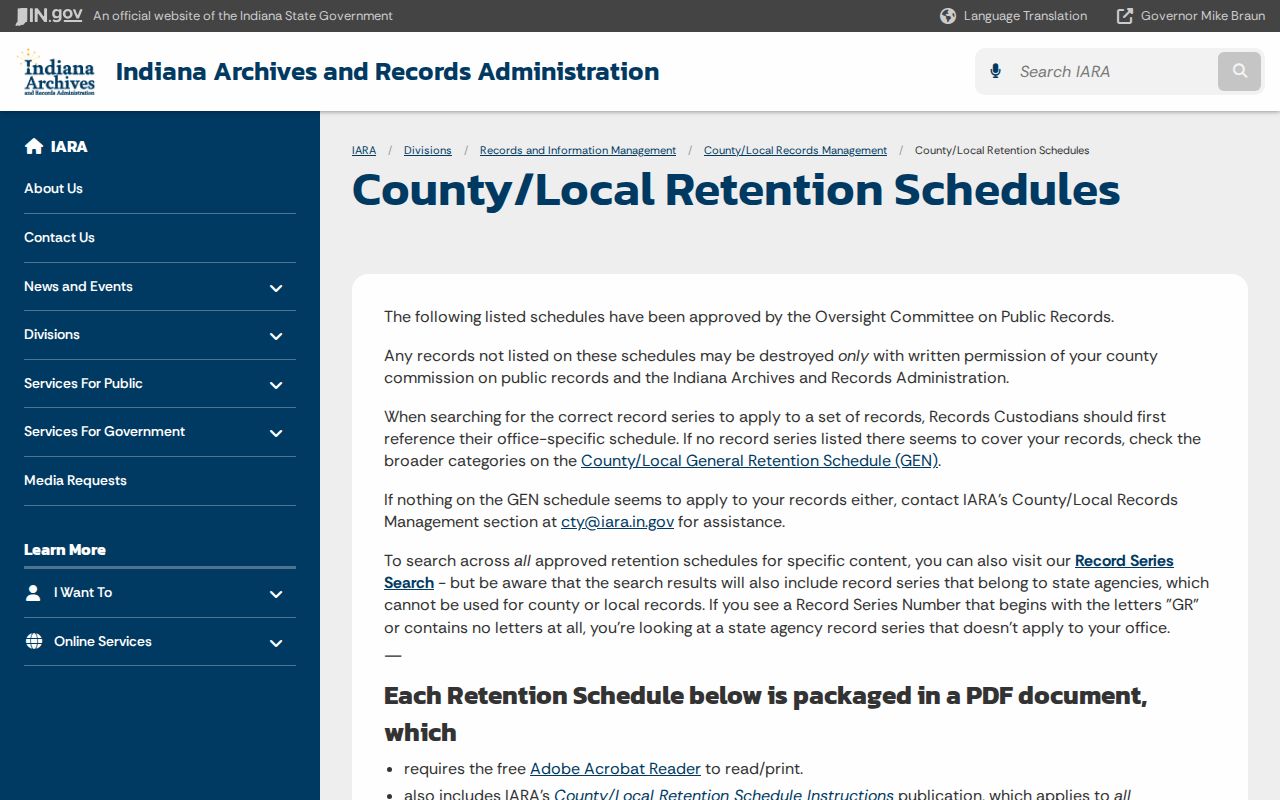
The schedule page explains retention authority, not a public Montgomery County arrest-search database.
Montgomery News Arrest Language
Local reporting adds context, and it also shows why the words matter. WCVL reported a suspect booked into Montgomery County Jail. The booking image came from the jail itself. A separate WIMC report covered persons of interest. It described them as detained. No charges or arrests had been filed at that time, the report stated. "Detained," "arrested," "booked," and "charged" each name a different step. The WCVL booking report shows how local narrative coverage handles these terms.
An article can name a lead and explain what agencies did. Current custody still rests with the jail. Disposition rests with the court.
Private Montgomery Arrest Archives
Private archives add another layer of Montgomery County arrest data. RecentlyBooked keeps a rolling county page with its own refresh claims. Arrests.org brings date and city filters, while Mugshots.com and Mugshots.zone both host county sections. Another option sits off to the side: a private Indiana Official Records Montgomery blotter guide. Some of these services offer longer date navigation than the official jail shell. Just remember that none of them is a government portal, and none carries an official completeness promise from Montgomery County.
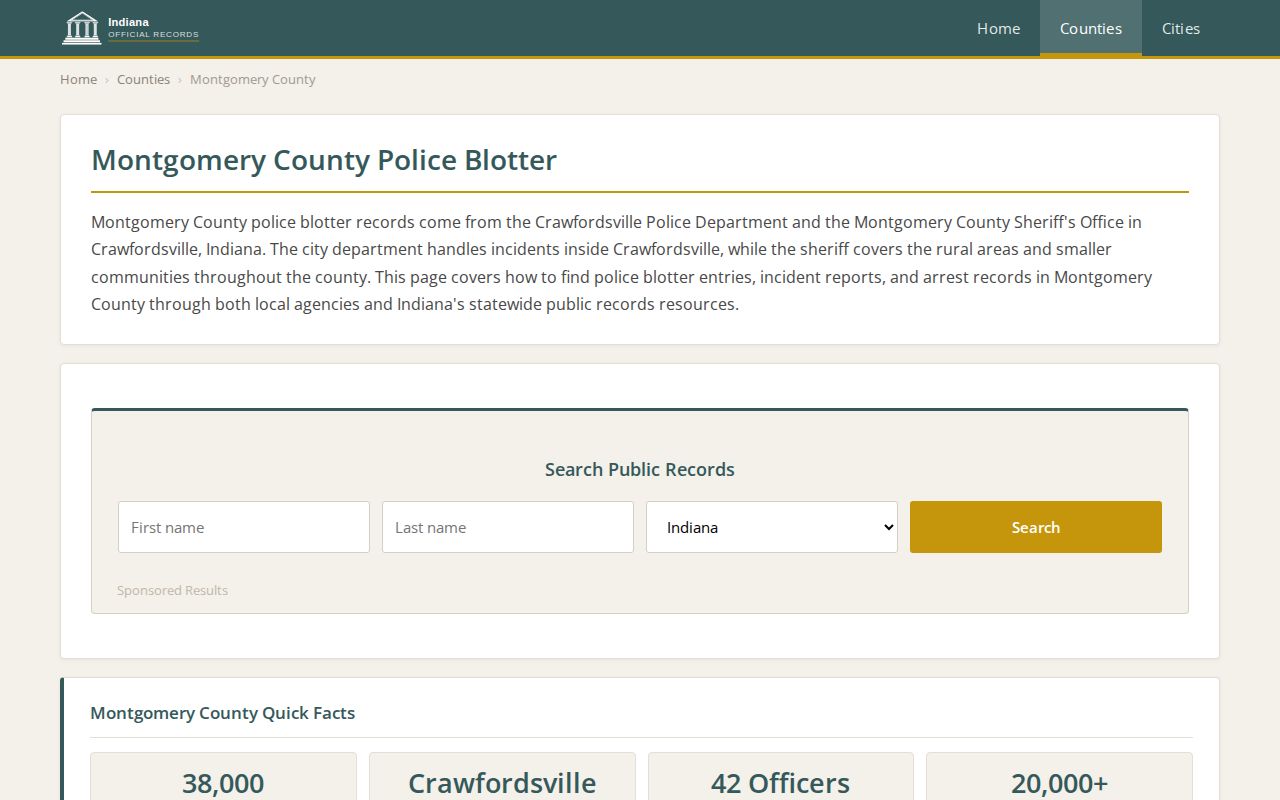
Treat a private arrest page as a lead only. Find a date or agency there, then chase down the source booking record yourself.
Montgomery Reports Need Court Context
An arrest report shows what police did and what they wrote down. It captures one moment in a case. Prosecutors can drop or change the charges later. How a case ends is a court matter, not a jail matter. A Montgomery County blotter entry may even describe an event. That event might be one where no one was arrested at all. For the court side, Indiana runs MyCase. It is the public portal for non-confidential cases in participating courts. Search it carefully and narrow results to Montgomery County. A docket sharing a name with the person arrested proves nothing by itself. Sealed, expunged, juvenile, and other protected files stay out of public view.